 RadixPro
RadixPro
RadixPro
Choosing the right Brushless Motors in 2026 requires more than comparing speed, voltage, and price. Global buyers now examine efficiency curves, torque stability, thermal limits, controller compatibility, noise levels, and supplier consistency. A motor that performs well on a test bench may struggle inside a dusty pump, compact drone, factory conveyor, or battery-powered vehicle.
Dr. T. Kenjo, a recognized researcher in permanent-magnet and brushless motor technology, expressed a practical engineering principle: “Motor performance depends on the complete drive system, not the motor alone.” This reminder remains valuable. The motor, controller, sensor, gearbox, wiring, and cooling path must work together. Ignore one part, and the promised efficiency can disappear.
This guide reviews leading Brushless Motors for international buyers, with attention to real operating conditions. We will examine power ranges, construction quality, control methods, duty cycles, certifications, customization, and after-sales support. Small details matter. A loose connector can stop a production line. Poor heat dissipation can shorten winding life. An attractive datasheet can still hide limited continuous torque.
Some rankings may remain debatable. Buyer priorities differ by application, region, and budget. That is worth admitting. Instead of naming one universal winner, this overview identifies suitable choices for demanding use cases and explains where each option may fall short. The goal is practical selection, not exaggerated marketing.
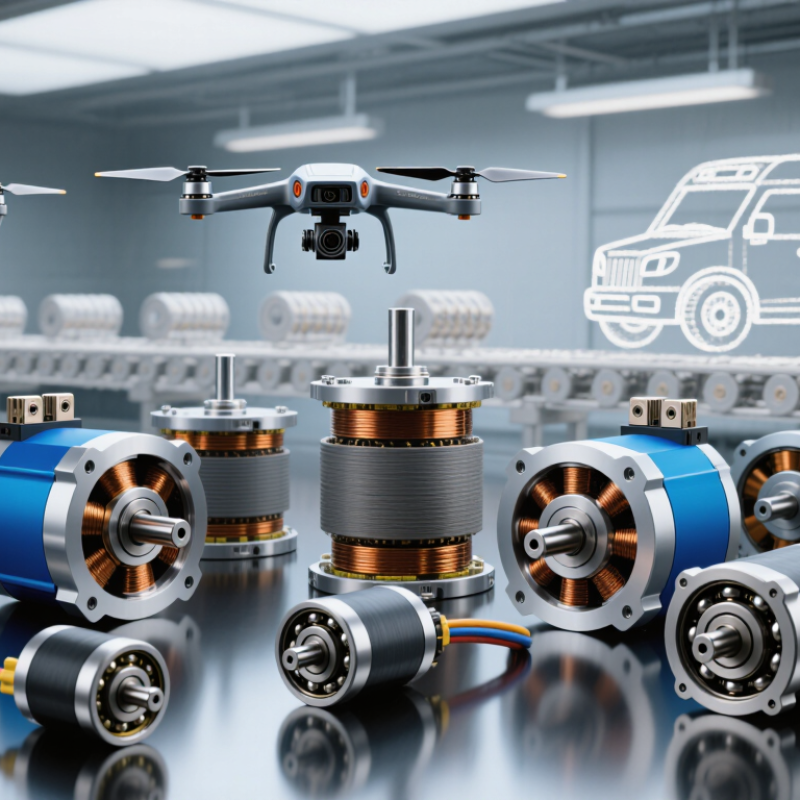
Brushless motors use electronic commutation instead of physical brushes. Permanent magnets sit on the rotor, while controlled current energizes stationary windings. This design reduces friction, electrical arcing, and brush replacement. It also supports accurate speed control in pumps, fans, robotics, and compact equipment.
The numbers explain their importance. The International Energy Agency estimates that electric motor systems consume about 46% of global electricity. Even small efficiency gains can reduce operating costs across thousands of machines. U.S. Department of Energy guidance also links proper motor sizing, variable-speed control, and system maintenance with meaningful energy savings. A buyer should examine the complete drive system, not only the motor label.
Practical details matter. A brushless motor may run quietly beside a factory conveyor, but its controller still needs suitable voltage, cooling, and electromagnetic compatibility. Check torque at the actual duty cycle, not only the advertised peak.
Market reports from firms such as MarketsandMarkets and Grand View Research forecast continued growth in brushless motor demand, although their estimates differ by application and region. That variation deserves caution. Supply chains, rare-earth magnet exposure, repair access, certification, and local service can change the real purchase value. My own buying mistake would be trusting efficiency percentages without testing heat, noise, and controller performance under load.
Inrunner motors place the rotor inside the stator. They suit pumps, fans, and compact drive systems. Outrunner motors create stronger low-speed torque. They work well in conveyors, robotics, and direct-drive equipment. Axial-flux motors are thinner. Their cooling and manufacturing consistency need careful checking.
KV shows approximate no-load revolutions per volt. A higher KV usually means faster rotation. It also usually provides less torque per ampere. Do not treat KV as a complete performance rating. Load changes everything.
Continuous current matters more for regular operation. Peak current only describes short bursts. A motor may reach high peak power, then overheat within several minutes. Check duty cycle, winding resistance, and temperature limits.
No. Enclosure temperature, airflow, speed, and load can reduce continuous output. A closed housing may need forced cooling. Measure temperature after thirty minutes, not after one exciting minute. Short tests can flatter performance.
Hall sensors usually improve low-speed positioning and starting. Sensorless control reduces wiring and cost. However, sensorless starting may feel rough under heavy loads. Field-oriented control can make torque smoother and quieter. The controller still matters.
Request efficiency curves at your actual voltage, load, speed, and ambient temperature. Check whether the figure includes the controller. Compare continuous torque, peak torque, rated speed, and temperature together. One percentage is not enough.
Confirm phase count, sensor logic, encoder feedback, shaft diameter, mounting holes, and connector pinout. Also check controller communication and startup current. A matching wattage can still hide an incompatible connector. That small detail can stop installation.
Review voltage range, frequency, electromagnetic compatibility, conformity requirements, and protection ratings. Humid locations may need corrosion protection and a suitable ingress rating. Verify classification, origin records, test reports, and package dimensions with a qualified customs professional. Paperwork helps. Physical samples still matter.
Test at least three samples under the intended load. Record noise, vibration, heat, startup behavior, and efficiency. A vibration at 3,000 rpm may become a serious bearing problem later. I once ignored mounting stiffness, and the test became unreliable. That mistake deserves repeating carefully.
This guide to the 2026 top Brushless Motors explains why they are increasingly important to global buyers seeking efficient, reliable, and low-maintenance motion solutions. It introduces the basic operating principles of brushless technology and compares major motor types, including inrunner and outrunner designs, by examining specifications such as voltage, power, torque, speed, efficiency, size, cooling, and control requirements. Readers will learn how to evaluate performance beyond headline ratings by considering duty cycles, operating environments, controller compatibility, noise, lifespan, and total ownership cost.
The article also highlights regional standards, electrical compatibility, certifications, voltage differences, documentation, shipping requirements, and import considerations that may affect international purchasing decisions. Finally, it provides a practical framework for selecting the right motor according to the application, load profile, available space, environmental conditions, control system, maintenance expectations, and budget. By combining technical comparison with application-focused planning, global buyers can make informed and reliable Brushless Motors purchasing decisions in 2026.
