RadixPro
For global buyers, selecting High Efficiency Motors in 2026 is no longer a simple search for the highest nameplate efficiency. Motor systems often operate for thousands of hours each year, driving pumps, fans, compressors, conveyors, and machine tools. The United Nations Environment Programme’s United for Efficiency initiative estimates that electric motor systems consume roughly half of global electricity. Small efficiency gains can therefore reduce substantial operating costs.
The commercial question is practical. Can the motor deliver stable torque in a hot factory, tolerate voltage variation, and fit the existing drive? The International Energy Agency repeatedly identifies industrial efficiency as a major route for lowering energy demand and emissions. Meanwhile, IEC 60034-30-1 defines international efficiency classes, including IE3 and IE4, while regional rules such as the European Union’s Regulation (EU) 2019/1781 set minimum requirements for many motor applications. These standards help, but they do not remove the need for careful verification.
Real conditions matter.
A 75 kW motor running continuously may justify a higher purchase price through reduced electricity use, especially where power tariffs are high. Buyers should compare efficiency at actual load, service factor, insulation class, bearing design, ingress protection, and variable-frequency-drive compatibility. Independent test evidence, supplier manufacturing records, and clear warranty terms strengthen purchasing confidence. Still, no global ranking fits every plant. Some published efficiency figures rely on ideal test conditions, not dusty floors, frequent starts, or partial-load operation. This guide examines leading 2026 options with that limitation in mind, combining standards, technical data, lifecycle economics, and practical buyer experience.
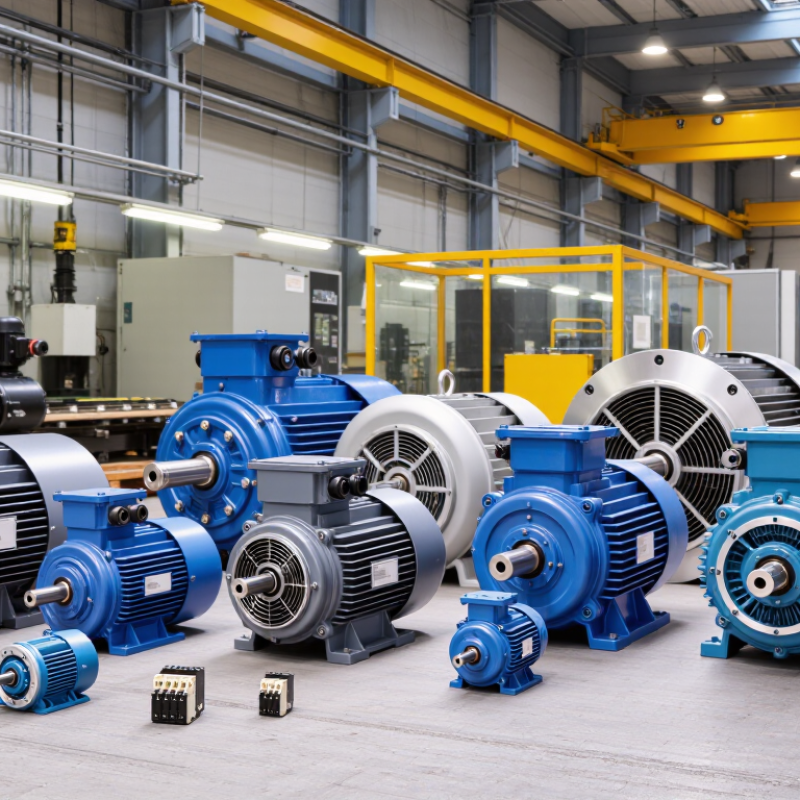
High-efficiency motors convert more electrical power into useful mechanical output. They reduce heat, operating costs, and cooling demand. In 2026, global buyers should examine efficiency classes under IEC 60034-30-1 or the applicable regional standard. IE4 and IE5 motors can deliver excellent results, but classifications are not always directly comparable across test methods. The details matter. Rated load, voltage, frequency, and temperature can change real performance.
A reliable selection process begins with the duty cycle. A motor running near its rated load usually performs better than one greatly oversized. Check starting torque, speed control, enclosure protection, insulation class, and bearing design. Request test data from an accredited laboratory when possible. I would not treat an efficiency label alone as a buying decision. Some guides simplify the issue too much. Actual installation losses can disappoint, especially with poor alignment, unstable voltage, or frequent starts.
Tips: Compare full-load and partial-load efficiency. Confirm local efficiency requirements before ordering. Ask for the declared test standard and tolerance range. Measure vibration after installation. Keep records for later review. A small measurement mistake can become a large energy cost.
Choosing a high-efficiency motor in 2026 requires more than reading the nameplate. Motor type, efficiency class, load pattern, and installation conditions must work together.
A three-phase induction motor suits pumps, fans, and conveyors with steady loads. Permanent magnet motors can offer excellent part-load performance, especially in variable-speed equipment.
Synchronous reluctance motors may reduce rotor losses, but their control systems require careful setup.
Small details matter.
Efficiency classes under IEC 60034-30-1 help buyers compare motor performance. IE3 remains common for general industrial duties, while IE4 can reduce energy losses further. IE5 designs may provide stronger savings in selected applications.
However, a higher class does not guarantee the lowest operating cost. Oversized motors often run below their efficient range.
That mistake is common.
Match the motor to its duty cycle.
A pump operating continuously may justify IE4 or IE5 equipment. A lightly used machine may gain less from the additional purchase cost. Check rated load, starting torque, speed range, ambient temperature, and voltage compatibility.
For variable-frequency drives, confirm insulation strength and cooling performance.
Dust, humidity, and frequent starts also affect reliability.
I have seen energy estimates fail when engineers ignored partial-load operation.
Field measurements are safer than assumptions. Compare measured current, running hours, and load changes before selecting the final motor.
2026 Best High Efficiency Motors for Global Buyers
For global buyers, motor selection starts with operating conditions, not catalogue efficiency. The IEA reports that electric motor systems consume roughly half of global electricity. Even a small efficiency improvement can reduce long-term energy costs. Check the IEC 60034-30-1 efficiency class, but do not stop at the rating. Compare performance at the actual load range, especially below 50% load. A conveyor, pump, and compressor need different torque behavior.
Voltage and frequency compatibility can prevent expensive failures. Confirm the local grid standard, starting current, insulation system, and variable-speed-drive suitability. In humid factories, choose suitable ingress protection and corrosion resistance. In dusty sites, cooling design matters. I once reviewed a motor specified for 40°C ambient conditions, yet its enclosure trapped heat near a furnace. The datasheet looked acceptable. The application was not. This is where selection becomes less perfect, but more honest.
Tips: Request tested efficiency curves, not only nameplate figures. Ask for IEC test documentation, noise data, bearing details, spare-part availability, and warranty terms. Calculate total cost over ten years, including electricity, maintenance, downtime, and disposal. The U.S. Department of Energy notes that lifecycle energy costs often exceed purchase prices for industrial motors. Still, efficiency data may vary by test method. Compare equivalent standards carefully. A cheaper motor can become costly when service support is distant. A premium specification can also be unnecessary for a lightly used fan.
Key selection criterion: annual energy loss at a 75 kW operating point. Lower losses generally support lower lifecycle cost, especially in continuous-duty applications.
Calculation basis: 75 kW shaft output, 4,000 operating hours per year, and electricity priced at US$0.12/kWh. Annual loss equals input energy minus shaft output energy. Buyers should compare efficiency at the actual duty point, expected load profile, operating environment, service requirements, voltage and frequency compatibility, and applicable international standards.
2026 Best High Efficiency Motors for Global Buyers
Leading 2026 motor technologies now focus on efficient operation, flexible control, and dependable supplier support. Permanent magnet motors can reduce energy losses in pumps, fans, and compressors. Synchronous reluctance designs offer strong efficiency without rotor magnets. Variable frequency drives help motors match real load conditions, instead of running at full speed. Integrated thermal sensors also protect equipment during long operating cycles.
However, efficiency labels alone can mislead. A higher-rated motor may perform poorly if its load profile is misunderstood. Global suppliers should provide verified test data, dimensional drawings, noise values, and maintenance guidance. Strong suppliers can support voltage variations, regional standards, spare parts planning, and remote commissioning. They should also explain production lead times clearly. Traceable quality records matter. So does honest communication when customization increases cost or delivery risk. In practice, some digital monitoring systems remain difficult for smaller maintenance teams. That weakness deserves attention.
Tips: Request performance data at several load points. Check drive compatibility before ordering. Compare five-year operating costs, not only purchase prices. Ask for factory acceptance testing and clear warranty conditions. Review the supplier’s service network in your destination market. Keep one backup plan.
| Motor Technology | Typical Efficiency Position | Key Technical Characteristics | Best-Fit Applications | Variable-Speed Capability | Supplier Capability to Verify | Relevant Standards and Tests | Global Buyer Considerations |
|---|---|---|---|---|---|---|---|
| IE4 Squirrel-Cage Induction Motor | High efficiency; generally available across common industrial power ratings. Actual efficiency depends on output, pole count, voltage, frequency and load. | Robust rotor construction, no permanent magnets, high starting reliability and broad service support. | Industrial pumps, fans, compressors, conveyors, machine tools and general-purpose production equipment. | Very good with a properly matched variable-frequency drive; motor insulation and bearing-current protection should be checked. | Verified efficiency maps, thermal design data, insulation-system rating, vibration limits, balancing process and spare-parts availability. | IEC 60034 series, IEC 60034-30-1 efficiency classification, IEC 60034-2-1 testing and applicable national electrical regulations. | Usually the simplest option for worldwide maintenance because of mature designs, widely available service skills and comparatively predictable replacement costs. |
| IE5 Synchronous Reluctance Motor | Very high efficiency potential, especially in variable-load systems operated with an inverter. | Rotor uses magnetic reluctance rather than rotor windings or permanent magnets; low rotor losses and strong partial-load performance are possible. | Variable-torque pumps, fans, air-handling systems, compressors and high-duty industrial drives. | Excellent, but normally requires a compatible drive, commissioning parameters and a matched motor-drive package. | Motor-drive compatibility, control software, rotor mechanical strength, acoustic performance, commissioning support and service training. | IEC 60034 series, efficiency testing under the declared operating conditions, EMC requirements and drive-system verification. | Can reduce operating energy, but buyers should evaluate the complete motor-drive system rather than comparing motor nameplate efficiency alone. |
| IE5 Permanent-Magnet Synchronous Motor | Very high efficiency potential over a wide operating range, subject to design, load profile and control strategy. | Permanent magnets provide rotor excitation, reducing rotor electrical losses; high power density and compact dimensions are common advantages. | Servo systems, elevators, robotics, compressors, traction equipment, high-efficiency pumps and space-constrained machinery. | Excellent with a dedicated drive; sensorless control or feedback devices may be used depending on speed range and positioning accuracy. | Magnet retention, demagnetization resistance, thermal protection, overspeed testing, encoder integration and end-of-life handling procedures. | IEC 60034 series, applicable machinery safety rules, EMC requirements and application-specific overspeed and thermal tests. | Higher power density may reduce machine size, while magnet supply, temperature limits, drive compatibility and maintenance procedures require careful review. |
| High-Efficiency Synchronous Reluctance Motor with Integrated Drive | High system efficiency is possible because the motor and inverter are engineered as one package. | Integrated power electronics can reduce cabinet space, wiring length and installation work; thermal management becomes a package-level issue. | Compact pumps, fan arrays, HVAC equipment, process skids and distributed automation systems. | Built for variable speed and often provides programmable ramping, protection functions and condition-monitoring data. | Drive cooling method, ingress protection, software access, cybersecurity controls, replacement-module strategy and total harmonic current data. | IEC 60034, IEC 61800 drive requirements, EMC standards and local grid-connection requirements. | Useful where installation space is limited, but buyers should confirm whether the integrated electronics can be serviced locally. |
| High-Efficiency Three-Phase Induction Motor for Hazardous Areas | Efficiency can meet high-efficiency classes, but certified enclosure, cooling and protection requirements may affect size and cost. | Designed for explosive atmospheres with certified protection concepts, controlled surface temperature and specialized cable-entry arrangements. | Chemical processing, oil and gas facilities, paint plants, grain handling and other classified industrial locations. | Possible when the motor, protection method and drive are certified for the intended operating range. | Valid hazardous-area certificates, temperature class, gas or dust group, cable glands, routine tests and traceable production records. | IEC 60079 series, IEC 60034 series and the requirements of the installation country or region. | Certification validity, installation method and maintenance competence are more important than efficiency ranking alone in hazardous locations. |
| Water-Cooled High-Power Motor | High efficiency can be maintained at large power ratings when cooling performance is correctly managed. | Liquid cooling provides high heat-transfer capability and can support compact packages; water quality and leak protection are critical. | Steel, mining, marine, test benches, large compressors and high-power process equipment. | Suitable for variable speed when cooling flow, bearing limits and drive harmonics are included in the system design. | Cooling-circuit design, heat-exchanger performance, corrosion protection, leak detection, pressure testing and maintenance instructions. | IEC 60034 series, pressure and piping requirements, ingress-protection requirements and project-specific marine or industrial rules. | Evaluate total lifecycle cost, including pumps, filtration, water treatment, inspection access and protection against freezing or corrosion. |
| Air-Cooled Permanent-Magnet Traction Motor | High efficiency and high torque density are possible across frequent acceleration and deceleration cycles. | Compact electromagnetic design, regenerative operation capability and high transient torque; thermal cycling must be carefully controlled. | Electric mobility, automated guided vehicles, industrial transport systems and specialized traction platforms. | Excellent with a traction inverter and feedback system; field-weakening operation may extend the speed range. | Torque-speed maps, thermal-cycle validation, vibration resistance, ingress protection, insulation life and functional safety documentation. | IEC 60034, applicable vehicle or railway standards, EMC requirements and project-specific functional safety tests. | Buyers should compare complete duty-cycle energy consumption, not only peak efficiency or rated output. |
| Servo Motor with Feedback | High efficiency is combined with precise motion control; efficiency is usually secondary to dynamic accuracy and repeatability. | Low-inertia rotor options, encoder or resolver feedback, rapid torque response and high overload capability. | Robotics, packaging, semiconductor equipment, CNC machinery and precision material handling. | Designed for wide speed ranges, rapid reversals, positioning and coordinated multi-axis operation. | Feedback resolution, tuning tools, thermal model, overload duration, connector standard, cable availability and replacement compatibility. | IEC 60034, drive-system EMC requirements, machine safety standards and application-specific performance tests. | Confirm controller interoperability, commissioning software access and long-term availability of feedback devices and cables. |
| High-Efficiency Single-Phase Motor | Generally lower efficiency and lower power density than comparable three-phase motors, but practical for small installations. | Designed for single-phase supply using capacitor-start, capacitor-run or electronically assisted starting methods. | Small pumps, fans, compressors, agricultural equipment and light commercial machinery. | Limited with conventional designs; electronic speed control requires a compatible motor and controller. | Starting-current data, capacitor life, thermal protection, voltage tolerance, duty rating and regional electrical approvals. | IEC 60034 series and the electrical safety and energy-efficiency requirements of the target market. | Verify supply voltage, frequency, starting torque and actual duty cycle before selecting a nominally efficient model. |
| Explosion-Protected Permanent-Magnet or Reluctance Drive System | Potentially high system efficiency, but certification and operating-envelope restrictions must be confirmed for the complete assembly. | Combines an advanced motor with a controlled drive and specialized protection architecture for classified environments. | Energy-intensive process equipment where variable-speed control and hazardous-area compliance are both required. | High, provided the motor, inverter, sensors, enclosure and protection concept are certified as a compatible system. | Complete-system certificate, thermal assessment, fault response, software revision control, service procedures and spare-drive planning. | IEC 60079 series, IEC 60034 series, IEC 61800 drive requirements and local hazardous-area legislation. | Do not purchase the motor and inverter as unrelated components unless the certification and operating limits explicitly permit it. |
In 2026, high-efficiency motor selection begins with the site, not the catalogue. A motor rated for one factory may struggle in a dusty coastal plant. Measure voltage, load profile, ambient temperature, altitude, and starting frequency before ordering. Keep alignment precise. Soft foot, poor coupling, and undersized cables can erase efficiency gains. Small errors matter. During commissioning, record insulation resistance, vibration, current balance, and bearing temperature. These measurements create a reliable baseline for future maintenance.
Lifecycle cost includes purchase, installation, electricity, servicing, downtime, and disposal. A cheaper motor can become expensive when it runs lightly loaded or requires frequent shutdowns. Match the motor to actual duty cycles, especially pumps, fans, and conveyors with variable demand.
Variable-speed control can reduce energy use, but only when configured correctly. Harmonic distortion, cooling changes, and minimum speed limits need review. The calculation is not perfect. Energy prices and production schedules change.
For international projects, verify efficiency classes, safety markings, electrical approvals, documentation, and local import requirements before shipment. Requirements may differ between the destination country and the installation site. Confirm rated data, test methods, ingress protection, hazardous-area suitability, and language requirements for manuals. Use accredited testing or certification records where regulators request them. Keep serial records and maintenance evidence. This supports audits and service decisions. Allow contingency time. Compliance paperwork is often underestimated, and a technically excellent motor can remain idle when documents arrive late.
It converts more electrical power into mechanical output. Less energy becomes heat, so operating and cooling costs may decrease.
Review IEC 60034-30-1 or the relevant regional standard. IE3, IE4, and IE5 ratings may use different testing methods.
No. A higher class does not guarantee lower total costs. An oversized motor may perform poorly under light loads.
Check the duty cycle, rated load, starting torque, speed range, and running hours. A steady pump may need different equipment than an intermittent machine.
A three-phase induction motor often suits steady industrial loads. Permanent magnet motors may perform better at partial load.
Confirm insulation strength, cooling performance, speed range, and voltage compatibility. Incorrect settings can increase heat and vibration.
Yes. Poor alignment, unstable voltage, dust, humidity, and frequent starts can reduce performance. Small problems grow quickly.
Request full-load and partial-load efficiency data, test standards, tolerances, and laboratory details. Field measurements are safer than assumptions.
Measure current, vibration, running hours, and load changes. Keep records for later review. I would not trust the label alone.
Estimates may ignore partial-load operation or installation losses. Engineers sometimes assume constant loads, but real equipment changes. That matters.
This guide to High Efficiency Motors for global buyers explains the fundamentals behind motor efficiency, including performance ratings, energy-saving principles, and the standards expected in 2026. It compares major motor types and efficiency classes, showing how to match each option with applications such as industrial equipment, pumps, fans, compressors, conveyors, and automated systems. Readers will also learn how load profile, operating speed, control methods, environmental conditions, voltage requirements, and maintenance needs influence motor selection.
The article reviews leading 2026 technologies, including advanced magnetic designs, improved cooling systems, variable-speed compatibility, smart monitoring, and durable insulation materials. It also highlights how supplier capabilities, technical support, documentation, installation quality, and spare-parts availability affect long-term results. Finally, the guide examines lifecycle costs rather than purchase price alone, covering energy consumption, maintenance, downtime, and replacement planning, while emphasizing international efficiency standards, electrical safety, certification requirements, and reliable cross-border compliance.
