RadixPro
In 2026, global buyers need a clearer method for selecting Low Voltage Motors. Price alone rarely reveals the real purchasing risk. A motor may fit the machine, yet fail under local voltage, frequency, heat, or dust conditions. Details matter. This guide introduces a practical framework for comparing motor performance, supplier reliability, and long-term operating costs across international markets.
Experienced sourcing teams usually begin with the application, not the catalog. They check rated power, torque, speed, duty cycle, insulation class, cooling method, and enclosure protection. A conveyor in a humid coastal plant needs different protection from a clean indoor pump room. Regional standards also deserve careful review, including IEC or NEMA requirements, efficiency rules, documentation, and certification expectations. These checks reduce delays during installation and inspection. They do not remove every risk.
Supplier evaluation should include factory capability, winding quality, testing equipment, traceability, spare parts, and after-sales response. Ask for test reports, sample units, drawings, and clear warranty terms. Compare landed cost, not only the quoted unit price. Freight, packaging, customs procedures, energy use, and replacement time can change the final decision. Some recommendations may look convincing but remain incomplete without field data. That is worth admitting. Trial orders and independent verification can expose weaknesses before a large purchase. The following outline explains how to balance technical fit, compliance, commercial value, and supply continuity when sourcing Low Voltage Motors worldwide.
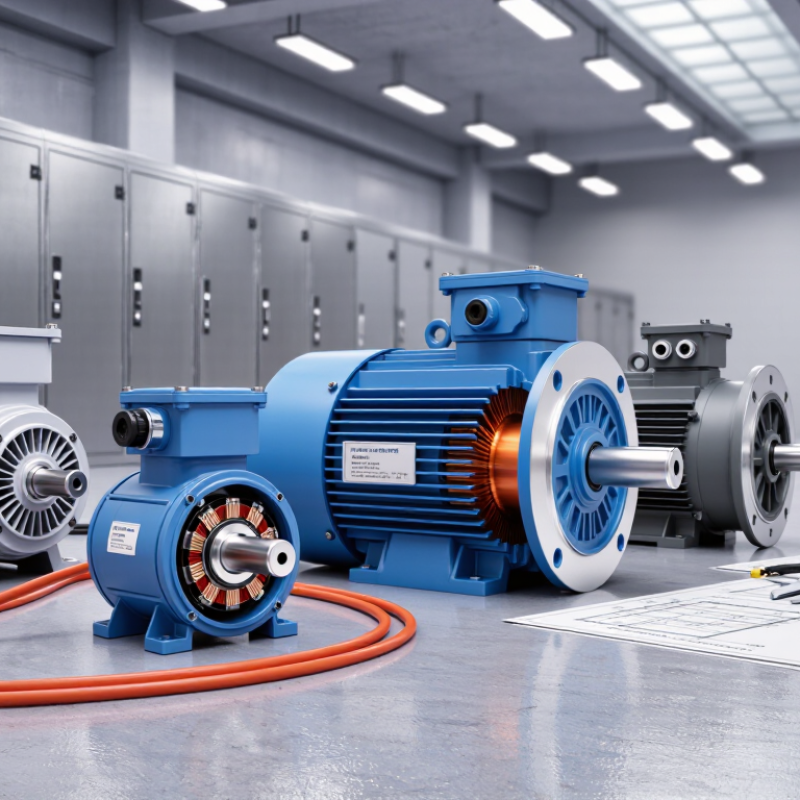
Choosing a low voltage motor begins with a precise application definition. Record the supply voltage, frequency, phase, rated power, speed, and starting method. Do not rely only on the existing motor nameplate. It may reflect an old operating condition.
Describe the driven load in practical terms. Is it a pump, conveyor, fan, compressor, or machine tool? Note starting torque, running torque, acceleration time, duty cycle, and daily operating hours. A conveyor carrying uneven boxes needs different torque behavior from a ventilation fan. Include starts per hour, braking requirements, gearbox ratio, and whether a variable frequency drive will control speed. Small omissions can create large sourcing problems.
Check the installation conditions before comparing quotations. Measure ambient temperature, altitude, humidity, dust, washdown exposure, mounting position, shaft direction, and available cooling space. Specify enclosure protection, insulation class, efficiency requirements, noise limits, and acceptable temperature rise. Ask suppliers for dimensional drawings, performance curves, routine test records, and conformity documents for the destination market. Verify the actual voltage and frequency at the site, not just the values written in a purchasing file. I have seen technically suitable motors fail because ventilation was blocked or the load profile was misunderstood. The specification is never perfect. Leave room for engineering review, especially when data comes from several facilities.
The chart compares common three-phase low-voltage supply references used when specifying motors for international sourcing. Voltage and frequency must match the installation power system. Before final selection, also confirm rated output, phase, duty cycle, starting method, enclosure protection, ambient temperature, altitude, installation environment, and applicable IEC or local requirements.
Reference basis: IEC 60038 standard voltage concepts and commonly used industrial 50 Hz and 60 Hz supply systems. Actual utility voltage and motor nameplate requirements should always be verified for the destination site.
Low-voltage motors are not interchangeable just because their nameplates show similar power. Induction motors suit many continuous-duty pumps, fans, and conveyors, while synchronous designs can offer precise speed control in suitable systems. For variable loads, compare the motor with its drive and control method, not in isolation. A compact conveyor may need frequent starts; a ventilation fan may run steadily for hours. The difference matters.
Efficiency classes help narrow options, but ratings need context. Check the applicable test standard, supply frequency, voltage, and rated load before comparing figures. A motor’s peak efficiency may occur near a particular load, not throughout its operating range. That detail is easy to miss. Review expected duty cycles, ambient temperature, enclosure protection, insulation class, and starting torque. These ratings affect performance in the actual installation, especially where dust, heat, or repeated starts are present.
For global sourcing, request complete datasheets and confirm that the stated performance matches the intended operating conditions. Compare rated speed, full-load current, service factor, and efficiency at likely load points. Ask how tolerances and test results are documented. A low purchase price can look convincing on paper, yet energy use and downtime may tell a different story. Specifications can still leave gaps; clarify unusual requirements in writing before approving a substitute.
2026 How to Choose Low Voltage Motors for Global Sourcing?
Verify Voltage, Frequency, Standards, and Global Compliance
A low-voltage motor is not globally interchangeable. Confirm the nameplate voltage, phase, frequency, rated current, speed, and connection method before ordering. A 400 V, 50 Hz motor may not suit a 460 V, 60 Hz installation. That assumption is expensive. The International Energy Agency reports that motor systems consume roughly half of global electricity, making efficiency a procurement issue, not only an engineering detail. Select the required IE efficiency class under IEC 60034-30-1, then check whether local rules demand specific minimum efficiency levels. Frame dimensions, mounting position, insulation class, ambient temperature, and altitude also affect performance.
Tips: Request a complete technical data sheet, test report, and certificate for the exact model. Do not accept a generic certificate. Verify whether the document covers the same power rating, frame size, and production site. For North American projects, compare IEC data with applicable NEMA requirements. For European projects, review current ecodesign obligations and conformity documentation. The U.S. Department of Energy identifies motor-driven equipment as a major industrial electricity load, so small efficiency differences can become significant across hundreds of units. I still treat compliance files as evidence, not proof. Check the serial number, inspection date, marking, and destination-country requirements before shipment. A spreadsheet can still miss a frequency mismatch.
2026 How to Choose Low Voltage Motors for Global Sourcing?
Choosing low voltage motors requires more than comparing catalog prices. Evaluate suppliers through factory audits, verified references, and documented production controls. Ask how they control winding temperature, insulation thickness, shaft tolerance, and bearing installation. Request sample test reports, not only certificates. Check whether tests cover efficiency, vibration, noise, voltage variation, and rated load. Small details matter.
Inspect manufacturing quality before placing a large order. Review incoming material records, assembly instructions, and final inspection data. A factory should trace each motor by batch or serial number. Visit the production line if possible. Look for clean winding stations, calibrated instruments, and protected storage for finished units. A polished showroom proves little. The test bench matters more.
Total cost includes much more than the purchase price. Calculate energy use, freight, customs charges, installation time, spare parts, warranty handling, and expected downtime. Compare efficiency at the actual operating load, not only the nameplate rating. Confirm lead times and replacement support in writing. Cheap motors can become expensive after repeated failures. Still, a detailed spreadsheet is not proof. Supplier claims need independent checks. I would also leave room for uncertainty, because transport delays and local service costs are often underestimated. Ask for pilot units and monitor them under real conditions for several weeks. That evidence is more useful than optimistic promises.
| Evaluation Area | Data Dimension | Recommended Benchmark or Reference Data | Verification Evidence | Decision Priority |
|---|---|---|---|---|
| 1. Application and Technical Fit | ||||
| Motor specification | Rated power and speed | Match the motor to the equipment load and duty cycle. Common low-voltage industrial ranges are approximately 0.12–1,000 kW, with 2-, 4-, 6-, or 8-pole designs selected according to required speed. | Approved technical datasheet, load calculation, torque-speed curve, and sample nameplate. | Critical |
| Electrical compatibility | Voltage, frequency, and connection | Specify the destination-grid requirements, such as 230/400 V or 400/690 V at 50 Hz, or 460 V at 60 Hz. Confirm delta/star connection and terminal-box configuration. | Routine test report, nameplate drawing, winding connection diagram, and destination-country electrical review. | Critical |
| Operating environment | Ingress protection and installation conditions | IP55 is a common baseline for general industrial indoor use. Higher protection may be necessary for outdoor, washdown, dusty, humid, or corrosive environments. | IEC 60034-5 classification, enclosure drawings, environmental test records, and installation review. | Critical |
| Duty and thermal load | Duty type and insulation system | Use the correct IEC 60034-1 duty designation, such as S1 for continuous duty. Class F insulation is widely used; allowable temperature rise must be confirmed for the selected design. | Thermal test report, insulation-system specification, duty-cycle confirmation, and winding-temperature data. | Critical |
| 2. Manufacturing Quality and Supplier Capability | ||||
| Energy performance | Efficiency class and test method | Specify IE3 or IE4 where required by the application or local regulation. Efficiency classification should be stated and tested according to IEC 60034-30-1 and the applicable test method. | Accredited or traceable efficiency test report, efficiency map, loss breakdown, and nameplate data. | Critical |
| Production control | Process capability and traceability | Require controlled winding, rotor balancing, bearing installation, impregnation, painting, and final assembly processes. Each motor should be traceable to a production lot and test record. | Process flow chart, control plan, lot traceability, calibration records, and internal nonconformance records. | Critical |
| Routine testing | Electrical and mechanical tests | Minimum checks should include winding resistance, insulation resistance, dielectric withstand, no-load current, vibration, noise where specified, and rotation direction. | Signed routine test report for each motor or lot, calibrated-equipment list, and acceptance criteria. | Critical |
| Mechanical reliability | Bearings, balance, vibration, and shaft runout | Verify bearing type, grease arrangement, rotor dynamic balance, shaft dimensions, mounting tolerances, and vibration limits appropriate to the motor size and installation. | Balance report, vibration measurement, dimensional inspection report, bearing specification, and spare-parts plan. | Critical |
| Quality management | Quality system maturity | A documented quality-management system aligned with ISO 9001 is a useful baseline. Certification should be valid, scope-relevant, and issued by an accredited certification body. | Valid certificate, audit report, corrective-action records, inspection procedures, and complaint statistics. | Important |
| Customization capability | Adaptation to regional requirements | Assess the ability to provide different voltages, frequencies, mounting forms, brake options, encoder provisions, cable glands, corrosion protection, and documentation languages. | Approved drawings, engineering-change procedure, sample customization records, and technical-support response time. | Important |
| 3. Global Sourcing and Compliance | ||||
| Regulatory compliance | Destination-market requirements | Confirm the applicable electrical-safety, energy-efficiency, EMC, import, labeling, and documentation requirements before purchase. Requirements differ by destination and motor application. | Declaration of conformity where applicable, test reports, technical file, country-specific labels, and customs documents. | Critical |
| Packaging and transport | Export protection and shipment readiness | Packaging should protect against impact, moisture, corrosion, shaft damage, and terminal-box deformation during multimodal transport. Confirm pallet dimensions and container utilization. | Packaging specification, drop or transport-risk assessment, moisture-protection method, packing list, and pre-shipment photographs. | Important |
| Supply continuity | Capacity and lead-time control | Evaluate normal production lead time, peak-season capacity, critical-component availability, minimum order quantity, safety-stock options, and recovery plans for disruptions. | Capacity plan, production schedule, component-risk register, business-continuity plan, and historical on-time-delivery data. | Critical |
| Service support | Warranty and after-sales response | Define warranty duration, covered failures, exclusions, spare-parts availability, troubleshooting procedures, and response-time commitments before contract signing. | Warranty terms, service-level agreement, failure-analysis process, spare-parts list, and escalation contacts. | Important |
| 4. Total Cost of Ownership | ||||
| Purchase cost | Quoted unit price | Compare equivalent specifications only: power, speed, efficiency class, enclosure, mounting, insulation, bearings, accessories, testing, packaging, and documentation. | Itemized quotation with validity period, currency, Incoterm, payment terms, tooling charges, and included accessories. | Important |
| Delivered cost | Landed-cost formula | Landed cost = unit price + tooling allocation + packaging + inland freight + international freight + insurance + duties + customs fees + destination delivery. | Freight quotation, tariff classification, duty calculation, insurance rate, customs-fee estimate, and destination delivery quote. | Critical |
| Energy cost | Lifetime electricity consumption | Annual energy cost = operating hours × load-adjusted input power × electricity tariff. Compare measured efficiency at the actual operating load, not only the nameplate full-load value. | Efficiency test data, load profile, annual operating hours, local electricity tariff, and sensitivity analysis. | Critical |
| Maintenance cost | Service parts and downtime | Include bearings, grease, seals, fans, terminal components, inspection labor, planned replacement, and production losses caused by unplanned downtime. | Maintenance schedule, spare-parts pricing, mean-time-between-failure data where available, and downtime-cost model. | Critical |
| Financial risk | Payment, currency, and quality-risk exposure | Assess payment milestones, currency volatility, inspection cost, rejection allowance, rework, warranty claims, and the cost of supplier replacement. | Contract draft, payment schedule, inspection plan, quality-penalty terms, and risk-adjusted cost calculation. | Important |
| 5. Recommended Supplier-Selection Scoring Model | ||||
| Technical fit | Application suitability score | Weight: 25%. Score voltage, frequency, torque, duty, efficiency, enclosure, mounting, environment, and compatibility with the driven equipment. | Use a 0–5 score: 0 = unacceptable, 3 = meets minimum requirements, 5 = exceeds requirements with documented evidence. | 25% |
| Manufacturing quality | Process and product-quality score | Weight: 25%. Score process control, testing, traceability, dimensional consistency, vibration performance, corrective actions, and audit results. | Require objective evidence; do not award full points for certificates alone. | 25% |
| Total cost | Risk-adjusted lifecycle-cost score | Weight: 25%. Include landed cost, electricity consumption, maintenance, spare parts, downtime, warranty exposure, and disposal or replacement cost. | Use the same operating assumptions and currency for every quotation. | 25% |
| Supply and service | Delivery, compliance, and support score | Weight: 15%. Score lead time, capacity, continuity planning, documentation, warranty, technical support, and spare-parts availability. | Validate promised lead times against historical delivery data and production capacity. | 15% |
| Commercial risk | Contract and financial-risk score | Weight: 10%. Score payment terms, currency risk, price stability, change-control terms, claims handling, and contractual remedies. | Apply risk deductions for undocumented assumptions, unclear Incoterms, and weak warranty provisions. | 10% |
Confirm Sourcing, Testing, Documentation, and After-Sales Support
Global sourcing should begin with verified factory capability, not the lowest quotation. The IEA has estimated that electric motor systems consume about 45% of global electricity. Small efficiency losses can become expensive across thousands of operating hours. Ask for production records, material traceability, and evidence of similar export projects. A polished factory tour is not enough.
Testing must match the motor’s real duty. Require routine tests for resistance, insulation, no-load current, vibration, noise, and efficiency. For efficiency classification, reference IEC 60034-30-1 and request independent laboratory reports when risk is high. The U.S. Department of Energy notes that motor-driven equipment can represent more than 70% of industrial electricity use. That makes incomplete testing a costly weakness. Some buyers still accept a generic test sheet. It is a mistake.
Documentation should include drawings, terminal markings, tolerances, certificates, maintenance intervals, and packing details. Confirm voltage, frequency, enclosure rating, mounting form, bearings, and ambient temperature. After-sales support needs response times, spare-parts availability, troubleshooting procedures, and a named technical contact. Keep these terms in the purchase contract. Verbal promises disappear. A field failure may reveal gaps that factory samples never showed. I would also review the process after the first shipment, because one successful batch proves less than many buyers assume.
No. Compare voltage, frequency, speed, mounting, duty cycle, and starting torque before choosing a substitute. Similar power is not enough.
Induction motors often suit pumps, fans, and conveyors running steadily. Synchronous motors may help systems needing precise speed control.
Variable loads can change speed, current, and efficiency. A motor may perform well alone but poorly with an unsuitable drive.
Check voltage, phase, frequency, rated current, connection method, and speed. A 400 V, 50 Hz motor may not suit a 460 V, 60 Hz system.
Use the same test method, supply conditions, rated load, and efficiency class. Peak efficiency may occur near one load point only.
Heat, dust, altitude, enclosure protection, insulation, and repeated starts matter. A clean factory test cannot represent every field condition.
Request a complete datasheet, exact-model test report, drawings, certificates, tolerances, and packing details. Generic documents leave uncomfortable gaps.
Check resistance, insulation, vibration, noise, no-load current, and efficiency tests. Also confirm spare parts, response times, troubleshooting steps, and one technical contact.
Not necessarily. Energy losses, delays, and downtime may exceed the purchase saving. The spreadsheet may still miss a frequency mismatch.
Match documents with the exact model, power, frame, production site, serial number, and destination requirements. Evidence helps, but it is not perfect proof.
Choosing the right Low Voltage Motors for global sourcing requires a structured evaluation from application needs to long-term support. Start by defining the operating conditions, including load characteristics, speed, duty cycle, installation environment, temperature, and protection requirements. Then compare motor designs, efficiency classes, starting performance, control compatibility, and expected service life to identify the best technical fit. Voltage, frequency, insulation, safety, and regional conformity requirements should also be verified early to avoid compatibility problems during installation or import.
Supplier assessment should extend beyond price. Review manufacturing consistency, quality-control procedures, testing capabilities, production capacity, and traceability. Calculate total cost by considering energy consumption, maintenance, spare parts, transportation, and expected lifetime. Before placing an order, confirm sample testing, inspection procedures, technical documentation, packaging, delivery terms, warranty conditions, and after-sales communication. A reliable sourcing decision balances performance, compliance, quality, cost, and service, helping buyers secure Low Voltage Motors that remain dependable across different markets and operating environments.
