RadixPro
Electric vehicles are moving from specialist products into everyday transport. The International Energy Agency’s Global EV Outlook 2025 reports that electric car sales exceeded 17 million worldwide in 2024, representing more than one-fifth of new-car sales. That growth makes the powertrain worth understanding, not merely admiring.
An Electric Drive System converts stored electrical energy into controlled wheel movement. Its main parts include the battery pack, inverter, electric motor, reduction gear, and vehicle control unit. The battery supplies direct current. The inverter changes it into precisely controlled alternating current for the motor. As the driver presses the accelerator, sensors measure demand, while software adjusts torque within milliseconds. The motor then turns the wheels through a compact transmission. During braking, the process reverses. The motor acts as a generator and sends part of the kinetic energy back to the battery.
The stakes are real. The U.S. Department of Energy explains that electric motors can deliver high efficiency across a broad operating range, while regenerative braking reduces energy otherwise lost as heat. Still, efficiency is not a single number. Temperature, tire pressure, vehicle weight, charging losses, and driving speed all change real-world results. The picture is not perfectly simple.
This guide examines how each component works, how energy flows under acceleration and braking, and why system design affects range, performance, safety, and maintenance. Some explanations will simplify complex engineering. That is useful, but it should not replace measured testing or manufacturer specifications.
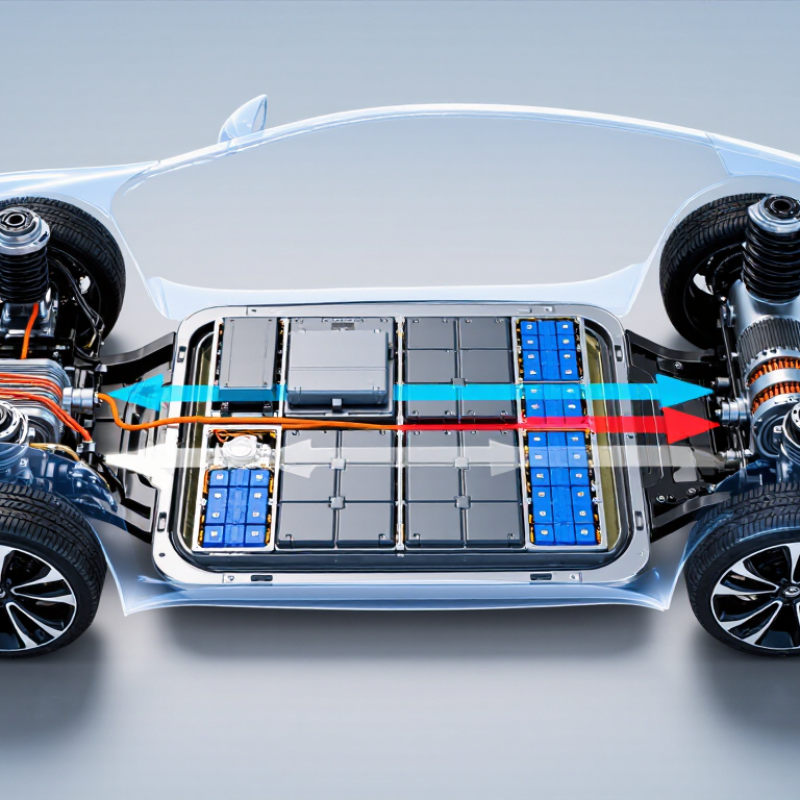
An electric drive system converts stored electrical energy into controlled mechanical motion. It usually includes a battery, inverter, electric motor, transmission, sensors, and control software. The battery supplies direct current. The inverter changes it into alternating current for the motor. The motor then turns the wheels, pump, fan, or industrial equipment.
This process feels simple from the outside. Inside, control happens in milliseconds. Sensors monitor speed, temperature, current, and torque. The controller adjusts power to maintain smooth movement and protect components. According to the International Energy Agency’s Global EV Outlook 2024, nearly 14 million electric cars were sold globally in 2023. Electric vehicles represented about one in five new car sales. That growth increases demand for efficient, durable drive systems.
The definition sounds neat. Real systems are less tidy. Heat, road conditions, battery age, and software calibration all affect performance. A laboratory efficiency figure may not match a cold morning or a steep hill. The U.S. Department of Energy reports that electric motors can convert over 90% of electrical energy into mechanical energy under suitable conditions. However, the complete system loses energy through inverters, cables, cooling, and transmission parts.
Tips: Check the entire drive system, not only the motor. Compare continuous power, peak power, thermal limits, and real operating conditions. Small cooling weaknesses can become major reliability problems.
What Is an Electric Drive System and How Does It Work?
An electric drive system converts stored battery energy into controlled wheel movement. Its core components include the battery pack, battery management system, inverter, electric motor, reduction gear, and vehicle controller. The battery stores direct-current electricity in multiple cell modules. The battery management system monitors voltage, temperature, and state of charge. It can disconnect the pack when unsafe conditions appear. The inverter then changes direct current into precisely timed alternating current for the motor.
The motor produces rotational force, while the reduction gear increases usable torque at the wheels. Sensors measure speed, position, current, and temperature several times per second. The controller uses these signals to adjust acceleration and regenerative braking. During deceleration, the motor works as a generator and sends some energy back to the battery. The onboard charger manages charging from alternating-current supplies. A DC-DC converter supplies lower-voltage accessories, such as lights and control modules.
The International Energy Agency reported more than 14 million electric cars were sold globally in 2023. That growth increases the importance of efficient components and dependable thermal management. Cooling plates, pumps, and heat exchangers help control battery and inverter temperatures. In field inspections, loose connectors and uneven cooling can create performance differences between similar systems. A neat diagram can mislead. Components interact continuously, not independently. Energy losses also remain real, especially during high-speed driving, cold weather, and rapid charging. Designing a reliable drive system requires testing these less convenient conditions, not just measuring peak motor output.
An electric drive system converts electrical energy into controlled mechanical motion. The battery supplies DC power, the inverter regulates voltage and frequency, the motor produces torque, and the reduction gear transfers that torque to the wheels. The values shown are representative efficiency levels during steady-state operation; actual efficiency varies with load, speed, temperature, and operating conditions.
An electric drive system moves a vehicle by controlling electrical energy and motor torque. According to the International Energy Agency’s Global EV Outlook 2024, electric car sales reached nearly 14 million in 2023. That growth makes efficient drive control increasingly important.
The process starts when the battery stores direct-current electricity. A power inverter then converts it into alternating current for the motor. The vehicle control unit reads accelerator, speed, and traction data. It calculates the required torque within milliseconds. The motor creates a rotating magnetic field, which turns the rotor and produces mechanical power. A reduction gear transfers this power to the wheels. During braking, the motor reverses its role. It becomes a generator and sends part of the kinetic energy back to the battery.
The U.S. Department of Energy reports that electric vehicles typically convert about 59% to 62% of grid energy into wheel movement. Conventional gasoline vehicles deliver roughly 17% to 21%.
Tips: Keep the battery within its recommended temperature range. Heat can reduce charging performance and long-term durability. Smooth acceleration also improves efficiency.
However, real systems are less tidy than this sequence. Road slope, tire pressure, payload, and software calibration constantly change the result. Some energy is still lost as heat. That detail is easy to overlook. Testing data should therefore be checked under realistic driving conditions, not only laboratory cycles.
What Types of Electric Drive Systems Are Commonly Used?
Electric drive systems differ by motor design, power source, and control strategy. Battery-electric systems use a rechargeable battery, inverter, and motor to deliver torque directly to the wheels. They are mechanically simple because they usually omit fuel injection, exhaust hardware, and multi-speed transmissions. During testing, engineers watch current, temperature, and vibration closely. Small errors matter.
Hybrid electric systems combine an internal combustion engine with one or more electric motors. A series hybrid uses the engine mainly as a generator, while the motor drives the wheels. A parallel hybrid allows both power sources to drive the wheels. Some systems switch between these arrangements. The transition can feel smooth, but calibration is difficult. Energy flow is not always intuitive.
Motor types also shape system behavior. Permanent-magnet synchronous motors provide strong efficiency and compact packaging. Induction motors tolerate high-speed operation and avoid permanent magnets. Switched-reluctance motors use a simpler rotor and can withstand high temperatures, though noise and torque ripple may require careful control. Fuel-cell electric systems generate electricity onboard through an electrochemical reaction and feed it to a motor. They need storage tanks, humidification control, and strict thermal management. In real workshops, the best design is rarely universal. Vehicle weight, duty cycle, cooling space, service skills, and operating climate can change the answer. Testing under only ideal conditions can hide weaknesses.
An electric drive system uses a battery, inverter, motor, and control software. The battery stores direct-current electricity. The inverter converts it for the motor. Torque reaches the wheels almost instantly, creating smooth acceleration and precise control. During braking, the motor can work as a generator and return some energy to the battery.
Efficiency is the clearest advantage. The U.S. Department of Energy reports that electric vehicles typically convert about 77–82% of stored electrical energy into movement, compared with roughly 12–30% for conventional vehicles. This reduces energy waste and can lower operating costs. Electric drives also produce no tailpipe emissions during use. The International Energy Agency reported more than four million public charging points worldwide by the end of 2023, showing rapid infrastructure growth.
Charging remains inconvenient for many drivers. A fuel stop may take minutes, while a full charge can take much longer. Cold temperatures can also reduce driving range. Battery production requires minerals, energy, and careful recycling systems. The IEA notes that electricity demand from electric mobility is rising, so grids must expand clean generation and charging capacity. The picture is not flawless. A heavy battery can also increase vehicle weight and tire wear. That trade-off deserves more attention. Forecasts can look confident, but real-world results still depend on climate, driving habits, electricity prices, and local infrastructure.
The main parts include the battery pack, battery management system, inverter, motor, reduction gear, and vehicle controller. Sensors track speed, temperature, current, and position. An onboard charger manages alternating-current charging. A DC-DC converter powers lights and other low-voltage equipment.
The battery stores direct-current electricity. The inverter changes it into controlled alternating current for the motor. The motor creates rotation, and the reduction gear transfers torque to the wheels. This sequence sounds simple. Real driving is messier.
It monitors cell voltage, temperature, and state of charge. It can disconnect the battery when unsafe conditions appear. This protects the pack during unusual heat, low charge, or electrical faults. Its readings are important, but sensors can still need checking.
During deceleration, the motor works as a generator. It sends part of the vehicle’s kinetic energy back to the battery. Regeneration cannot recover everything. Energy is still lost through heat, resistance, and braking limits.
Cooling plates, pumps, and heat exchangers control battery and inverter temperatures. Excessive heat can reduce charging performance and long-term durability. Cold conditions can also limit available power. Heat changes everything.
Battery-electric systems use a rechargeable battery, inverter, and motor. Hybrid systems combine an engine with one or more electric motors. Series hybrids mainly use the engine as a generator. Parallel hybrids allow both power sources to drive the wheels.
Permanent-magnet synchronous motors offer strong efficiency and compact packaging. Induction motors support high-speed operation without permanent magnets. Switched-reluctance motors tolerate high temperatures but may produce noise and torque ripple. No design wins everywhere.
High speed, cold weather, rapid charging, steep roads, low tire pressure, and heavy payloads can reduce efficiency. Software calibration also changes the result. Laboratory figures may look tidy. Road conditions are not tidy.
Testing should measure current, temperature, vibration, cooling balance, and connector condition. Engineers should include hills, cold weather, heavy loads, and repeated acceleration. A clean diagram can hide weak connections. Real-world testing deserves more attention.
Electric Drive Systems are engineered arrangements that convert electrical energy into controlled mechanical motion. They typically include a power source, power electronic converter, electric motor, control unit, sensors, and mechanical transmission. The converter regulates voltage, current, and frequency, while the controller interprets commands and adjusts motor operation. Sensors provide feedback about speed, position, temperature, and load, allowing the system to respond accurately and safely.
In operation, electrical power enters the system, is conditioned by the converter, and reaches the motor according to control signals. The motor then produces torque, which is transferred to the driven equipment through a shaft, gearbox, or other mechanism. Common types include variable-speed AC drives, DC drives, servo drives, and integrated traction systems. Their main advantages are high efficiency, precise control, quiet operation, and reduced maintenance. However, they may involve higher initial costs, complex control requirements, heat management challenges, and dependence on reliable electrical power and suitable energy storage.
