RadixPro
Industrial Motors quietly power modern production. They turn steel, move water, compress air, and drive conveyor belts through demanding facilities. Yet the market is broader than a simple horsepower comparison. AC motors, DC motors, servo motors, stepper motors, and gear motors each solve different operational problems.
The International Energy Agency and its 4E Electric Motor Systems Annex report that motor-driven systems consume roughly half of global electricity. That figure gives this topic practical urgency. A small efficiency gain can reduce heat, maintenance visits, and monthly energy costs across thousands of operating hours. The U.S. Department of Energy also identifies motor systems as a major industrial energy-saving opportunity, especially when motors, drives, pumps, and controls are assessed together.
“Energy efficiency is the cheapest, cleanest, and fastest energy resource,” says Dr. Steven Nadel, a recognized energy-efficiency specialist. His observation fits Industrial Motors closely, although it does not answer every purchasing question. The most efficient motor is not always the best choice. Load profile, starting torque, enclosure design, speed control, installation quality, and service conditions can change the outcome.
This guide examines the top 10 types of industrial motors, with attention to real factory conditions. Expect clear differences, but not perfect winners. A motor may perform beautifully on a test bench and struggle in dust, moisture, or repeated starts. The details matter. Sometimes, the overlooked specification matters most.
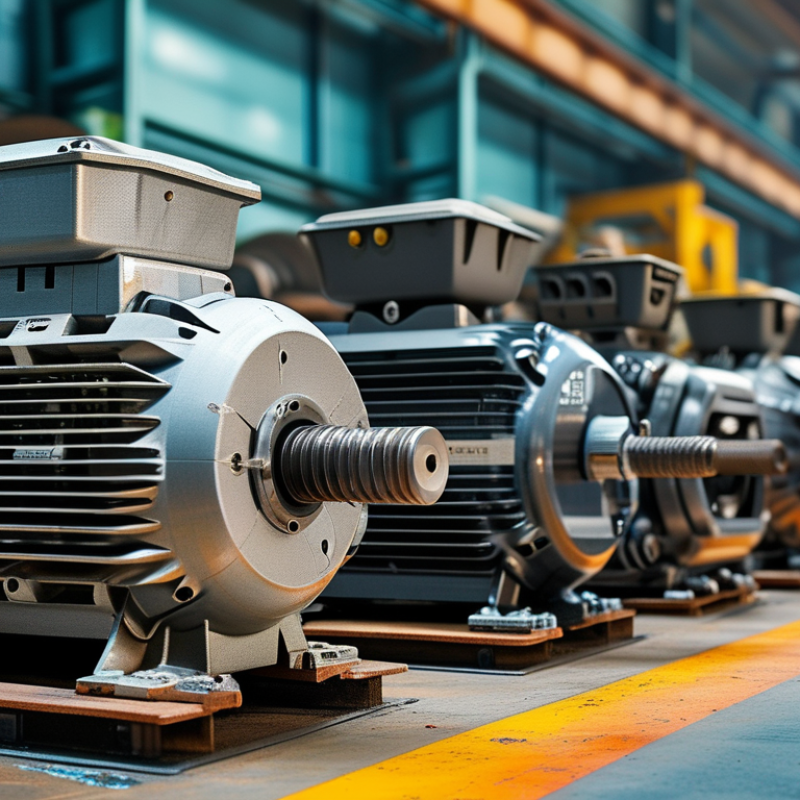
What Are the Top 10 Types of Industrial Motors?
What Industrial Motors Are and How They Work
Industrial motors convert electrical energy into mechanical motion. Inside each motor, magnetic fields create force between stationary and rotating parts. The stator produces the magnetic field, while the rotor turns the connected shaft. This shaft may drive a pump, conveyor, compressor, fan, or machine tool.
The ten common types include induction, synchronous, brushed DC, brushless DC, servo, stepper, universal, switched reluctance, gearmotors, and linear motors. Induction motors use a rotating magnetic field to induce current in the rotor. Synchronous motors maintain a precise speed with magnetic alignment. Brushed DC motors use brushes and a commutator, while brushless designs switch current electronically. Servo motors combine a motor with feedback for accurate positioning. Stepper motors move in measured increments. Small differences matter.
In a production plant, a gearmotor may turn a conveyor slowly while producing strong torque. A servo motor can position a cutting head within a narrow tolerance. A stepper motor may advance labels one controlled step at a time. Linear motors create direct straight-line motion instead of shaft rotation. During maintenance inspections, technicians often check vibration, bearing noise, heat, insulation, and current balance. Overloaded motors can run hot and lose efficiency. I would not treat any motor list as absolute, because duty cycle, load type, speed, and environment change the best choice. Even a correctly sized motor can perform poorly when ventilation is blocked.
Industrial motors fall into several main categories, each suited to a different operating demand. AC induction motors remain common for pumps, fans, compressors, and conveyors. Synchronous motors support steady speed and improved power factor. Wound-rotor motors provide strong starting torque for heavy loads. DC brushed motors offer simple speed control, but their brushes require regular inspection.
Brushless DC motors reduce mechanical wear and suit compact, efficient equipment. Servo motors deliver precise position, speed, and torque control in automated machinery. Stepper motors move in measured increments, making them useful for indexing systems. Switched reluctance motors tolerate demanding environments, although their noise can require careful evaluation. Gear motors combine a motor with gearing to produce higher output torque. Linear motors create direct motion without rotary transmission parts.
In plant inspections, motor choice should begin with load behavior, not popularity. Check starting current, duty cycle, shaft load, ambient temperature, and enclosure protection. Heat changes everything. A dusty conveyor room may need stronger sealing than a clean assembly area. Voltage variation can also affect winding temperature and service life. Some categories overlap, which can make comparison confusing. A brushless DC unit may serve a motion-control role, while a servo system adds feedback and stricter positioning. I have found that catalog ratings rarely tell the whole story; installation alignment, lubrication, and cooling often decide real performance. The best selection still needs field measurements and verified engineering data.
Industrial motors differ in torque, speed control, efficiency, and maintenance needs. The ranking is not absolute; the best choice depends on the machine.
An AC induction motor is rugged and economical, making it common in pumps, fans, and conveyors. A synchronous motor maintains precise speed and can improve power factor. A brushless DC motor offers efficient, quiet operation for compact equipment. A brushed DC motor provides simple speed control, but its brushes eventually wear. A servo motor delivers accurate position and torque control for robotic arms and packaging lines.
A stepper motor moves in measured increments and suits light-duty positioning. A universal motor produces high speed and strong starting torque, although it can be noisy. A switched reluctance motor tolerates harsh conditions, but its vibration and acoustic noise require careful design. A wound-rotor motor handles demanding starting loads, especially in lifting equipment. A linear motor creates direct motion without gears, helping high-speed inspection systems.
In field service, dust, heat, load cycles, and alignment often matter more than catalog ratings. A technically impressive motor can still fail when ventilation is poor. Maintenance teams should check insulation, bearings, vibration, and connection tightness.
I have seen sizing decisions focus too heavily on peak power. Continuous duty is often overlooked. That small mistake can turn a reliable installation into a hot, noisy one.
What Are the Top 10 Types of Industrial Motors?
Comparing industrial motors requires more than reading rated horsepower. The ten common categories include induction, synchronous, permanent-magnet, DC, servo, stepper, switched-reluctance, wound-rotor, universal, and linear motors. Each performs differently under changing loads. The International Energy Agency estimates that electric motor systems consume nearly half of global electricity. In industrial facilities, their impact is even larger. Efficiency deserves serious attention.
Check efficiency across the real operating range, not only at full load. IEC 60034-30-1 efficiency classes help compare motor performance consistently. A high-efficiency induction motor may suit pumps and fans with steady loads. A synchronous or permanent-magnet motor can reduce losses during variable-speed operation. Servo motors offer precise control, but their drives, tuning, and maintenance increase system complexity. The U.S. Department of Energy reports that motor-driven equipment represents more than half of industrial electricity use. Power factor, starting current, harmonics, heat, noise, and service intervals also affect total cost. A motor can look efficient on paper and disappoint on the factory floor.
Tips: Record load data for at least one production cycle. Compare kWh, not only nameplate efficiency. Check operation below 50% load. Review drive losses and ventilation needs. Measure vibration after installation. Small alignment errors matter. Some conclusions remain uncertain without field measurements. A short trial can reveal what calculations miss.
| No. | Industrial Motor Type | Typical Rated Power | Typical Speed Range | Typical Peak Efficiency | Speed-Control Capability | Starting Torque | Maintenance Demand | Main Advantages | Common Industrial Applications |
|---|---|---|---|---|---|---|---|---|---|
| 1 | Three-Phase Squirrel-Cage Induction Motor | 0.75–500 kW | 750–3,600 rpm | 88–97% | Excellent with a variable-frequency drive; limited without one | Medium to high | Low | Rugged construction, low cost, reliable operation, and broad industrial availability | Pumps, fans, compressors, conveyors, machine tools, and general-purpose machinery |
| 2 | Wound-Rotor Induction Motor | 75–2,000 kW | 300–1,800 rpm | 85–94% | Good through rotor-resistance control or a drive system | Very high | Medium to high | High starting torque and controlled acceleration for heavy loads | Hoists, cranes, mills, crushers, conveyors, and large winches |
| 3 | Permanent-Magnet Synchronous Motor | 0.5–500 kW | 500–6,000 rpm | 92–98% | Excellent with a suitable inverter or servo drive | High with electronic control | Low | High power density, strong efficiency at partial load, and precise speed control | High-efficiency pumps, compressors, robotics, conveyors, and electric vehicle systems |
| 4 | Synchronous Reluctance Motor | 1–500 kW | 750–3,600 rpm | 90–97% | Excellent with a variable-frequency drive | Medium with electronic starting | Low | No rotor magnets, low rotor losses, and efficient operation across variable loads | Fans, pumps, compressors, conveyors, and energy-saving retrofit projects |
| 5 | Brushless DC Motor | 10 W–100 kW | 500–20,000 rpm | 85–95% | Excellent with electronic commutation | High | Low | High efficiency, compact size, long service life, and strong dynamic response | Automation equipment, cooling systems, material handling, pumps, and mobile machinery |
| 6 | AC Servo Motor | 50 W–200 kW | 1–6,000 rpm | 85–95% | Excellent; closed-loop position, speed, and torque control | Very high | Low to medium | Exceptional positioning accuracy, rapid acceleration, and precise torque regulation | Robotics, CNC equipment, packaging machines, semiconductor tools, and assembly lines |
| 7 | Brushed DC Motor | 50 W–500 kW | 500–5,000 rpm | 75–92% | Excellent and relatively simple to implement | Very high | High due to brush and commutator wear | Strong starting torque, straightforward speed control, and easy regenerative operation | Legacy industrial drives, hoists, elevators, rolling mills, and battery-powered equipment |
| 8 | Stepper Motor | 5 W–5 kW | 0–2,000 rpm | 60–85% | Excellent for open-loop positioning; closed-loop versions improve reliability | High at low speed | Low | Simple digital control, repeatable incremental motion, and high holding torque | Indexing systems, labeling machines, small CNC equipment, laboratory automation, and feeders |
| 9 | Switched Reluctance Motor | 1–500 kW | 500–15,000 rpm | 80–93% | Excellent with a dedicated electronic converter | High | Low | Robust rotor, wide speed range, high-temperature tolerance, and no rotor windings or magnets | High-speed drives, pumps, compressors, fans, conveyors, and harsh-environment equipment |
| 10 | Universal Motor | 100 W–10 kW | 3,000–25,000 rpm | 60–85% | Good with voltage or electronic control | High | High due to brush and commutator wear | Very high speed, compact design, and operation from either AC or DC supplies | Portable industrial tools, small pumps, compact blowers, and low-duty equipment |
Comparison note: Values are typical engineering ranges for industrial motor classes. Actual performance depends on motor size, load profile, cooling method, operating speed, drive configuration, power quality, ambient conditions, and maintenance practices. Peak efficiency is not the same as full-load efficiency or system efficiency.
Choosing among the top 10 industrial motor types requires more than comparing horsepower. Induction motors suit pumps, fans, and conveyors because they are rugged and cost-effective. Synchronous motors improve efficiency under steady loads. Servo and stepper motors provide precise motion for robotics and packaging. DC and brushless DC motors support controllable speed. Switched-reluctance, universal, linear, and gearmotors solve more specialized tasks. The U.S. Department of Energy estimates that motor systems use about 68% of industrial electricity. The International Energy Agency also reports that electric motor systems consume roughly 46% of global electricity. Efficiency is not a minor detail.
Match the motor to the load profile, not only its rated power. Check starting torque, duty cycle, speed range, ambient temperature, dust, moisture, and available voltage. A conveyor with frequent starts may need high starting torque and a variable-speed drive. A washdown pump may require sealed protection and corrosion-resistant construction. Servo systems can be excellent, but they may be unnecessary for a simple fan. This is where selection often becomes imperfect: real loads change, and catalog data rarely reflects every factory condition. Measure actual current, temperature, and peak torque before purchasing.
Tips: Create a short load profile from one operating shift. Record starts, stops, speed changes, and idle periods. Leave thermal margin, but avoid excessive oversizing. A larger motor is not automatically safer or more efficient. Review IEC or NEMA efficiency data, installation requirements, and maintenance access. When uncertain, ask a qualified engineer to validate the calculation.
: An industrial motor converts electrical energy into mechanical motion. The stator creates magnetic force. The rotor turns the shaft. That shaft may drive a pump, conveyor, fan, compressor, or machine tool.
Induction motors are rugged and suitable for pumps, fans, and conveyors. Synchronous motors maintain precise speed. Servo motors use feedback for accurate positioning. Stepper motors move in controlled increments. Brushless motors switch current electronically. Small differences matter.
An induction motor often suits a steady conveyor load. A gearmotor can provide slow movement and strong torque. Frequent starts may require higher starting torque. A variable-speed drive may also help. The answer depends on the load.
Choose a servo motor for accurate positioning and changing motion demands. A stepper motor suits measured movements, such as advancing labels. Servo systems need feedback, tuning, and additional maintenance. They may be excessive for a simple fan. That judgment can be imperfect.
Compare efficiency across the actual operating range. Do not rely only on rated horsepower or full-load data. Record energy use during one production cycle. Check operation below half load. Review drive losses, heat, power factor, and ventilation.
Record speed, starting frequency, duty cycle, load type, voltage, and peak torque. Also inspect temperature, dust, moisture, and available maintenance space. A washdown pump may need sealed, corrosion-resistant construction. A larger motor is not automatically safer.
Technicians commonly check vibration, bearing noise, surface heat, insulation, and current balance. Blocked ventilation can make a correctly sized motor overheat. Small alignment errors matter. Listen closely. Measure actual conditions.
Catalog ratings may not reflect changing loads, idle periods, or repeated starts. Actual performance can differ from the calculation. Measure current, temperature, speed, and peak torque before purchasing. A short field trial may reveal missing details. Some conclusions remain uncertain.
Industrial Motors are machines that convert electrical energy into mechanical motion, powering equipment such as pumps, conveyors, compressors, fans, and production systems. This article explains how motors create torque through magnetic fields, then introduces their main categories, including AC, DC, synchronous, and electronically controlled designs. It examines ten important types: induction motors, synchronous motors, brushed DC motors, brushless DC motors, servo motors, stepper motors, universal motors, wound-rotor motors, reluctance motors, and gear motors. Each type is discussed according to its operating principle, strengths, limitations, and typical industrial uses.
The article also shows how to compare motor performance and efficiency by considering power output, speed, torque, starting current, duty cycle, energy consumption, control precision, noise, maintenance, and operating conditions. Finally, it provides a practical framework for selecting the right motor, emphasizing the application’s load profile, required speed range, environmental conditions, available power supply, installation space, control requirements, reliability expectations, and total operating cost.
