RadixPro
AC Gear Motors rarely attract attention until a conveyor stalls, a mixer struggles, or a packaging line loses speed. Then the choice of manufacturer matters. Buyers must weigh torque, gear ratio, duty cycle, efficiency, service access, and the conditions inside the plant—not just compare catalog prices.
The International Energy Agency’s 2011 report, Energy Efficiency Policy Opportunities for Electric Motor-Driven Systems, estimates that electric motor-driven systems use about 45% of global electricity. That figure covers far more than geared motors, but it shows why efficiency and correct sizing deserve close attention. Motor-drive authors Austin Hughes and Bill Drury emphasize a related principle: motor performance should be considered as part of the complete drive system, rather than in isolation. Practical advice. Still, specifications alone cannot tell the whole story.
This guide examines leading AC gear motor manufacturers and the differences that matter in real installations: product range, customization, efficiency options, global support, and documentation. Names such as SEW-EURODRIVE, NORD, Bonfiglioli, Sumitomo Drive Technologies, and WEG often appear in industrial purchasing discussions, but “top” depends on the application. A compact unit mounted beside a dusty conveyor has different demands from a washdown-rated motor on a food-processing line. Market reports also use different product definitions, so headline rankings can be misleading. Use them as a starting point, not a verdict. The comparison ahead focuses on evidence buyers can verify—and on the trade-offs worth asking about before specifying an AC Gear Motors solution.
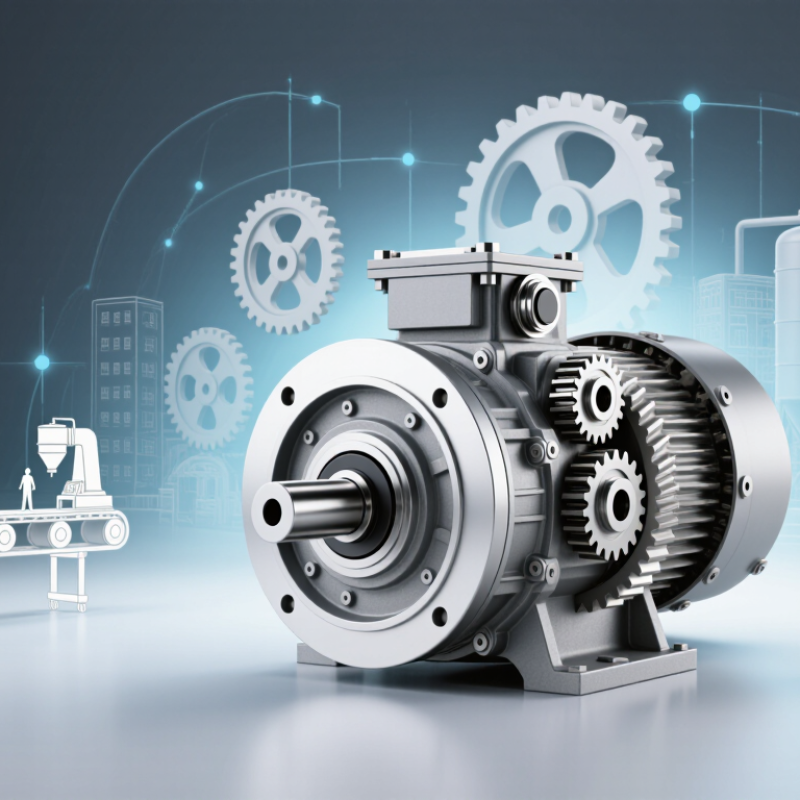
An AC gear motor combines an alternating-current motor with a gearbox in one drive unit. The motor supplies rotation; the gears reduce speed and increase usable torque. This makes the unit useful when equipment needs steady movement rather than high-speed rotation. A conveyor carrying cartons, for example, may need a slow, controlled belt. The motor and gearbox deliver that motion together. Compact layouts can also simplify installation.
The output depends on the motor, gear ratio, load, and power supply. A higher reduction ratio generally means slower output and more torque, though actual performance varies. Check the required speed and starting load before choosing a unit. A motor that seems powerful enough may still struggle when a machine starts under a heavy load.
Heat, duty cycle, mounting position, and noise matter too. Small details matter. AC gear motors are not interchangeable just because their rated power matches. Confirm shaft dimensions and operating conditions against the equipment’s needs. And leave some margin; real loads are rarely as tidy as a specification sheet suggests.
Evaluating leading AC gear motor manufacturers starts with the application, not a glossy catalog. A conveyor moving cartons needs different torque behavior from a mixer starting under a full load. Ask for rated output torque, gear ratio, service factor, and permissible radial load. Check whether published figures apply to continuous duty or brief operation. Small detail, big difference. Test data should state voltage, frequency, temperature, and measurement method. Without those conditions, efficiency and noise claims are difficult to compare fairly.
Build quality deserves practical checks. Review housing materials, gear finishing, bearing support, seals, and lubrication intervals. Ask how the motor handles heat during repeated starts, and whether replacement parts remain available. Request test reports, quality-system documentation, and examples of comparable installations.
Ask for evidence. A clear warranty helps, but its exclusions matter too. No scorecard is perfect; buyers sometimes overweight price or headline efficiency. I would also check service response times and ask who diagnoses failures in the field.
One concern: supplier documents can look complete while leaving duty-cycle assumptions vague. Ask direct questions, record the answers, and compare units under the same operating conditions.
In the AC gear motor market, recognized manufacturers usually fall into three groups: established industrial motor makers, specialist gearbox producers, and suppliers offering complete drive systems. Their reputations often rest on consistent production, application support, and documented performance—not simply a long product list. Some serve packaging lines, while others focus on conveyors, mixers, or ventilation equipment. Fit matters.
Look for clear torque and speed data, duty-cycle ratings, enclosure details, and access to replacement parts. A manufacturer that explains how its motor handles frequent starts or dusty conditions offers more useful evidence than broad claims. Independent test reports and traceable quality procedures can add confidence, though published figures may not reflect every installation. Comparisons are not always neat.
Tips: Match the gear ratio and rated output to the actual load. Check mounting dimensions, operating temperature, and service access before ordering. Ask for a written selection recommendation.
Recognition can vary by region and industry, so a familiar name is not automatically the best choice. Compare suppliers using the same load profile and operating conditions. For example, note whether a unit must run continuously beside a warm production line or start under a heavy conveyor load. A small mismatch can mean noise, heat, or premature wear. That detail is easy to overlook.
| Manufacturer Profile | Typical AC Gear Motor Offering | Common Applications | Market Recognition Indicators | Useful Comparison Points |
|---|---|---|---|---|
| Broad-portfolio industrial drive manufacturers | AC induction gear motors paired with helical, helical-bevel, or worm gear units; multiple ratios and mounting arrangements are commonly available. | Conveyors, material handling, packaging lines, and general factory equipment. | Recognized for extensive product ranges, configurable drive packages, and suitability for continuous industrial duty. | Check rated power, output torque, gear ratio, efficiency, enclosure rating, and the availability of replacement parts. |
| Precision motion-control manufacturers | Compact AC geared drives, including AC servo motor and gearbox combinations in product lines that support controlled positioning. | Indexing equipment, machine tools, robotics, and automated production machinery. | Known for emphasizing positioning accuracy, dynamic response, and integration with motion-control systems. | Compare backlash, encoder and drive compatibility, allowable radial and axial loads, and positioning requirements. |
| Specialist gearmotor manufacturers | Application-focused AC gearmotors, often offered with helical or worm reduction and a range of output speeds. | Food and beverage machinery, packaging equipment, and compact process machinery. | Recognized for focused gearmotor catalogs, application-specific configurations, and options for different operating environments. | Review washdown or corrosion-protection requirements, thermal limits, duty cycle, mounting position, and lubrication guidance. |
| Regional industrial drive manufacturers | Standardized AC motors and gearboxes supplied as matched gearmotor assemblies, with configurations adapted to local market needs. | Local machinery production, replacement projects, and general-purpose industrial installations. | Often valued for regional availability, local technical support, and familiarity with local electrical and mounting standards. | Verify voltage and frequency, applicable IEC or NEMA dimensions, service coverage, delivery times, and documentation. |
| Custom-engineered drive manufacturers | Modified or engineered AC gearmotor assemblies designed around specified torque, speed, shaft, mounting, or environmental requirements. | Special-purpose machinery, heavy-duty conveyors, and equipment with non-standard installation constraints. | Distinguished by engineering support and the ability to tailor drive configurations to a particular machine or operating condition. | Confirm the rated and peak load, starting conditions, service factor, ambient temperature, and scope of design validation. |
AC gear motor manufacturers differ in more than rated power. Their designs vary in gear type, output speed, starting torque, duty rating, and enclosure. One supplier may offer compact units for conveyors, while another supports custom shafts, brake assemblies, or washdown-ready housings. These details matter on the factory floor. A motor that fits the drawing may still run hot under frequent starts.
The U.S. Department of Energy’s 2014 Improving Motor and Drive System Performance sourcebook reports that motor-driven systems use about 68% of electricity in U.S. manufacturing. This makes efficiency and correct sizing practical buying criteria, not just catalog features. Compare efficiency data at the intended load, thermal limits, noise readings, and test documentation. Also check whether the manufacturer can provide replacement parts and engineering support. A broad product range is useful, but it does not guarantee a good match.
Tips: Share the real operating conditions before requesting a quote: load, starts per hour, ambient temperature, mounting position, and available space. Ask for test results at your operating point. Catalog ratings can leave gaps. Verify the details. A small mismatch in speed or mounting can create avoidable downtime.
Gearbox design is one way manufacturers’ product portfolios differ. The chart compares approximate upper reduction ratios commonly available for each architecture; actual ranges vary by product series and configuration.
When comparing suppliers, also consider rated power and torque, efficiency, duty cycle, mounting options, environmental protection, and customization—not reduction ratio alone.
AC gear motors appear wherever equipment needs steady rotation, controlled speed, and useful torque. In food processing, they drive mixers, filling lines, and conveyor belts carrying wet or chilled products. Packaging plants use them to move cartons through compact transfer sections. Warehouses rely on geared drives in conveyors and sorters, while wastewater facilities use them in screens and treatment equipment. The exact motor choice depends on load, duty cycle, washdown exposure, and starting frequency.
The U.S. Department of Energy’s 2014 United States Industrial Electric Motor Systems Market Assessment Report estimates that motor-driven systems account for about 68% of U.S. manufacturing electricity use. That figure covers motor systems broadly, not AC gear motors alone, but it shows why drive efficiency matters on production floors. Agriculture, material handling, and building services also use AC gear motors for feeders, lifts, and ventilation equipment. Selection is not always straightforward; a unit that suits a conveyor may struggle with frequent starts or shock loads.
Tips: Check output speed and torque under real operating loads, not just the nameplate rating. For dusty or wet areas, confirm the enclosure and sealing requirements. Allow for maintenance access, too. A cramped installation can turn a small repair into an avoidable shutdown.
It combines an AC motor with a gearbox. The motor provides rotation, while the gears reduce speed and increase usable torque. It suits steady movement, such as a carton conveyor belt.
Match the required output speed and torque to the load. Check the gear ratio, starting load, power supply, and operating conditions. Leave some capacity for real-world variation.
A machine may need more torque to start than to keep moving. A motor that appears powerful enough may struggle when a conveyor starts with heavy cartons. Check the load at startup.
Review duty cycle, temperature, mounting position, noise, voltage, and frequency. Ask whether performance figures apply to continuous use or brief operation. Small details matter.
Compare test results under the same conditions. Check rated torque, gear ratio, service factor, permissible radial load, and measurement methods. A polished catalog may leave assumptions unclear.
Look at housing materials, gear finishing, bearing support, seals, and lubrication intervals. Ask about replacement parts, service response, and warranty exclusions. Paperwork is not the whole story.
Not necessarily. Gear type, output speed, enclosure, shaft dimensions, and starting torque can differ. Confirm the fit and operating conditions against the equipment.
Share the load, starts per hour, ambient temperature, mounting position, and available space. Ask for test results at your actual operating point. I would double-check any neat catalog match.
AC Gear Motors combine an AC electric motor with a gearbox to deliver controlled speed and increased torque. They are valued for dependable operation, practical designs, and adaptability to different loads. When evaluating manufacturers, buyers can consider product quality, engineering expertise, customization options, energy efficiency, technical support, and the ability to provide solutions for specific operating conditions.
Manufacturers differ in their motor and gearbox configurations, available power and speed ranges, materials, and integration capabilities. Some focus on standard products for straightforward applications, while others offer tailored designs for specialized equipment. AC Gear Motors are used across industries such as manufacturing, material handling, packaging, food processing, and building systems. Choosing an appropriate supplier and motor depends on the required torque, speed, duty cycle, installation environment, and maintenance needs.
